
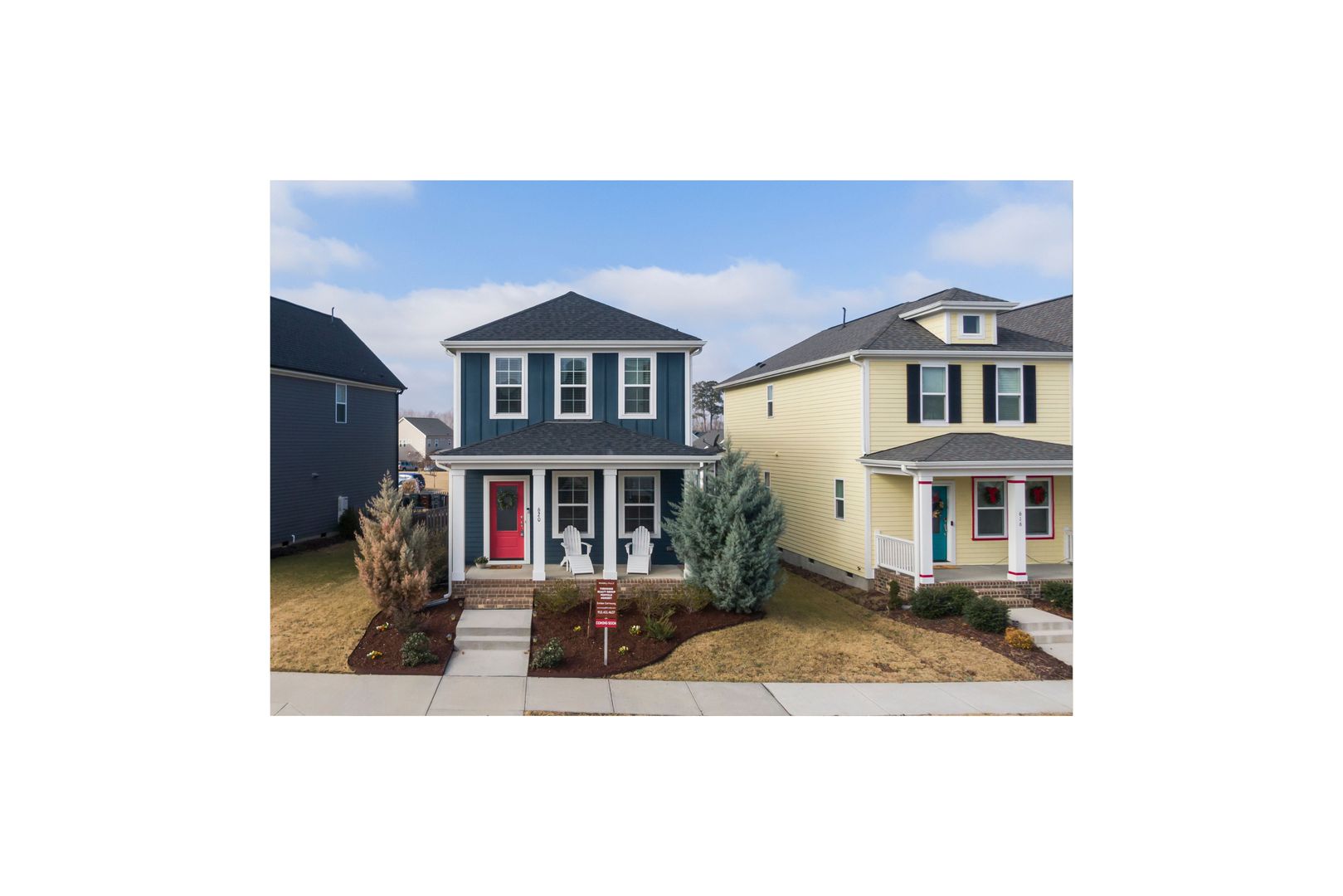
Minister Wants to Significantly Restrict Buy-to-Let Protection: What Does This Mean for Buyers and Landlords?
Anyone buying a property to rent out faces buy-to-let protection rules in many Dutch municipalities. In these municipalities, certain properties cannot be rented out without a permit during the first four years after purchase. These rules may be relaxed in the future.
Recent research shows that buy-to-let protection is no longer making a significant contribution to improving first-time buyers' chances of purchasing a home. Minister Elanor Boekholt-O’Sullivan therefore announced plans on 16 October 2026 to restrict the scheme. What is set to change, and what does this mean for buyers, investors and tenants?
What Is Buy-to-Let Protection and Why Was It Introduced?
Buy-to-let protection (opkoopbescherming) was introduced on 1 January 2022 and allows municipalities to temporarily restrict the rental of certain owner-occupied properties.
The scheme can apply to properties below a certain WOZ value (the official property valuation used for tax purposes) in areas designated by the municipality. Municipalities can currently decide for themselves which WOZ threshold to apply and which areas are subject to buy-to-let protection. Not every municipality has introduced the scheme.
When it was introduced, the scheme had three objectives: to give first-time buyers more opportunities in the housing market, to protect the quality of life in neighbourhoods and to tackle rogue landlords. According to the evaluation, approximately 70 municipalities had introduced buy-to-let protection as of 1 January 2026.
The coalition agreement had already included plans to investigate whether the scheme could be applied in a more targeted way. The findings of the evaluation now provide grounds for doing so.
Why Is Buy-to-Let Protection Becoming Less Effective for First-Time Buyers?
Buy-to-let protection was introduced partly to prevent first-time buyers from having to compete with investors when purchasing a property. By excluding certain properties from the rental market, buyers intending to live in the property themselves would have a better chance of purchasing a home.
According to the evaluation, the effectiveness of buy-to-let protection has declined since the second quarter of 2023. Under current market conditions, the scheme is no longer considered an effective way to improve first-time buyers' opportunities in the housing market.
This is partly due to changing conditions in the housing market. Interest rate developments and changes to property transfer tax and Box 3 taxation have affected the attractiveness of residential property as an investment.
In addition, the Affordable Rent Act (Wet betaalbare huur) and the Fixed Rental Contracts Act (Wet vaste huurcontracten) play an important role. Discussions with landlords, investors and estate agents show that these measures often carry more weight in decisions to purchase a property for rental purposes than buy-to-let protection itself.
Other measures are now also available to address undesirable rental practices. For example, the Good Landlordship Act (Wet goed verhuurderschap) provides options for taking action against rogue landlords.
Why Is the Current Scheme Being Criticised?
It is not only the effectiveness of buy-to-let protection that is being questioned. The evaluation is also critical of how municipalities apply the scheme.
Municipalities can currently decide for themselves which properties and areas are subject to buy-to-let protection. In many cases, there is insufficient justification for the chosen WOZ value threshold or for why the scheme is necessary in a particular neighbourhood.
A clear analysis of the impact on neighbourhood quality of life is also often lacking. As a result, it is not always possible to determine whether buy-to-let protection is an appropriate measure in a particular area.
Municipalities themselves, however, consider the scheme an important tool. It allows them to directly influence the balance between owner-occupied and rental properties in different neighbourhoods.
The minister therefore does not intend to abolish buy-to-let protection entirely, but wants to restrict the circumstances in which it can be applied.
What Will Change Under the Buy-to-Let Protection Scheme?
The minister is proposing two changes. First, the objective of the scheme will be adjusted. In addition, municipalities will have less freedom to determine where and to which properties buy-to-let protection applies.
In future, buy-to-let protection should focus solely on protecting the quality of life in neighbourhoods. Improving opportunities for first-time buyers and tackling rogue landlords will no longer be separate objectives of the scheme.
Three restrictions are proposed for applying the scheme:
-
Quality of life must demonstrably be under pressure. Municipalities must be able to demonstrate persistent problems affecting neighbourhood quality of life and an imbalance between owner-occupied and rental properties.
-
The scheme must be justified for each neighbourhood or district. The local situation must be compared with surrounding areas within the same municipality. Buy-to-let protection may only be introduced where the quality of life is demonstrably under greater pressure.
-
A maximum property value threshold. The minister wants to introduce a statutory upper limit and is investigating whether this could be linked to the average WOZ value of properties in the municipality concerned.
The final proposed change in particular could affect which properties fall under buy-to-let protection. Municipalities can currently set relatively high WOZ value thresholds themselves. A statutory maximum would restrict this flexibility.
The exact level of the new threshold is not yet known.
Why Does Neighbourhood Quality of Life Remain Important?
Although the evaluation shows that buy-to-let protection is no longer making a significant contribution to improving first-time buyers' opportunities, the minister believes the scheme can still play a role in protecting the quality of life in neighbourhoods.
One of the factors considered is how frequently residents move. According to figures from Statistics Netherlands (CBS), the tenant turnover rate in privately rented properties was 16.9% in 2024. For housing association properties, this was 7.4%, compared with 4.9% for owner-occupied properties.
Residents in the private rental sector therefore move more frequently on average. When residents regularly move away, this can affect social cohesion in a neighbourhood. For example, it may become more difficult to build long-term relationships with neighbours.
This does not mean that a higher proportion of rental properties automatically leads to a lower quality of life. The composition of a neighbourhood is just one of the factors that can play a role.
A balanced mix of owner-occupied and rental properties can help residents move to different types of housing within their own neighbourhood. Someone looking to move from a rental property to an owner-occupied home, for example, may be able to remain in the same area. This helps preserve existing social connections.
The minister wants municipalities to examine these local circumstances more carefully before introducing buy-to-let protection.
What Do the Plans Mean for Investors and Landlords?
For private investors and professional landlords, the proposed changes could create more opportunities. If municipalities are only allowed to apply buy-to-let protection in neighbourhoods where the quality of life is demonstrably under pressure, more existing properties may become available for purchase as rental investments.
The plans form part of the Housing Construction Acceleration Action Plan (Actieplan Versnelling Woningbouw). One of the government's objectives under this plan is to improve the investment climate for landlords.
At the same time, the supply of privately rented properties is under pressure. The evaluation shows that investors are purchasing fewer properties and that existing rental properties are increasingly being sold, for example when tenants move out. This practice is also known as uitponden, or selling off individual rental properties.
For first-time buyers, the sale of former rental properties can mean additional housing supply. For tenants, however, this development has another side: when rental properties are sold and are not rented out again, the available rental housing supply decreases. This is particularly noticeable for people looking for housing who cannot or do not want to buy and depend on the private rental market.
Tenancy law specialist Claudia van Meurs-Janssens describes the announced restrictions as a step in the right direction, but questions whether the measures go far enough. Other factors, such as tax regulations, rental legislation and financing costs, also play a role in decisions about renting out properties.
It therefore remains to be seen whether the announced changes will actually lead to increased investment in privately rented housing.
When Will the New Rules Take Effect?
The plans have been announced, but buy-to-let protection will remain unchanged for the time being.
To implement the changes, the Housing Act 2014 (Huisvestingswet 2014) must be amended. The minister intends to submit the legislative proposal for public online consultation at the end of 2026. This will be followed by several steps, including advice from the Council of State and consideration by the House of Representatives and the Senate.
It must also be determined what the new rules will mean for municipalities that have already introduced buy-to-let protection. These transitional arrangements will be developed in consultation with municipalities and the Association of Netherlands Municipalities (VNG).
No changes have been announced to the current four-year period.
Anyone currently planning to purchase a property to rent out must therefore still take the existing municipal rules into account. It is advisable to check in advance whether a property falls under buy-to-let protection and which conditions apply.
Conclusion: Less Buy-to-Let Protection, but Much Remains Uncertain
The minister wants to restrict buy-to-let protection to neighbourhoods where the quality of life is demonstrably under pressure. For investors and landlords, this could eventually create more opportunities to purchase properties for rental purposes. At the same time, the declining supply of privately rented housing remains an important concern, particularly for people looking for housing who cannot or do not want to buy.
The plans still need to be developed further and approved. Until then, the current municipal rules will remain in force.
Sources: Parliamentary letter, 16 October 2026; RIGO Evaluation Report (2026); Vastgoed Insider, 20 October 2026.